Showing posts with label Writing Tips. Show all posts

Sunday, 18 January 2026

Guest Post: The Curse of Continuity by Epic Fantasy Author Carol Browne...


You’ll hear writers complain about the number of typos that get missed during the editing and proofreading processes, so their work is published with errors it is too late to fix. This is something that happens to even the most well-known authors, regardless of what publisher they use.

As a proofreader who is also an author, I have seen typos in my own published work and have no idea how I missed them. There is some kind of brain glitch that sees what it expects to see, hence, for example, ‘to’ becomes ‘do’, and the meaning of an entire sentence is lost. We just have to hope that readers suffer from the same glitch or like our work enough to overlook the mistakes.

Proofreading errors are bad enough, but far worse are errors in continuity and these may be harder to spot. For example, a character may sit at a table while having already done so on the previous page; someone claims to have come by bus, yet we know he left his car in the car park; the protagonist is shown into the boss’s office by a blonde secretary who is a redhead when he comes out.

I have just finished editing a book I wrote over several years. It started as three novellas which were then glued together into one novel. Revisiting old material is a challenge anyway but more so when a book has been written in sections with not enough thought to the sequence of events. Continuity errors have been a nightmare with this particular work, and chunks of the narrative had to be rewritten to iron out the inconsistencies. Proofreading errors, conversely, have been a doddle.

While storytelling is an author’s main function, there are many other factors that must be borne in mind. An author must:

1.     Create interesting, believable characters that the readers will care about

2.     Provide them with a plotline that works

3.     Weave any necessary subplots seamlessly into the narrative

4.     Be fluent and grammatically correct in the language of their choice

5.     Avoid spelling and style errors and typos

6.     Create a consistent atmosphere to suit the genre of the work

7.     Do sufficient research to support the credibility of the work

8.     Decide if certain themes, social commentaries or observations are to be included

9.     Maintain the interest of the readers throughout, regardless of their demographic, and

10  Never disappoint their readers with weak endings and plot holes.

While juggling all of the above, continuity might slide under the radar, but an author must keep track of what their characters are doing: their movements; appearance; clothes; dialogue; relationships; backstories; ages; emotions, and so on. Added to that is the need to be aware of changes in time and place.

That’s a lot of plates to keep spinning! No wonder errors creep in.

Alas, after you’ve written and submitted your book and you’re sure you’ve created perfection, you might see one of those plates smashed on the ground when a continuity error is finally discovered—but it’s too late, because your book’s been published! A case in point is the book I am currently reading. It’s well written and compelling and the author is prolific and professionally published; however, I noted that the main character asked someone if they had any kin, to be told no, only to ask that same person the same question two pages further on, again with the same response. Given all those spinning plates the author had to keep an eye on, I’d say it happens to the best of us.

Here is a brief intro to Book One of Carol's exciting trilogy.


Banished from Elvendom and forced to seek refuge among the Saxons, young Elgiva faces a grim future - until she crosses paths with Godwin, a Briton enslaved by the people she must now call allies.

When a dark power rises to claim dominion over Elvendom, Elgiva and Godwin set off on a dangerous quest for the legendary Lorestone: the only thing that can stop the looming darkness. With a reluctant elf boy as their guide and a stubborn pony by their side, they must navigate the treacherous land and harness ancient magic before it’s too late.

As battle lines are drawn, Elgiva must embrace her true heritage, and Godwin must learn to wield the secret power he possesses. But can they find the Lorestone in time - or will Elvendom fall forever?

An historical fantasy adventure set in 6th century Britain, THE EXILE OF ELINDEL is the first book in Carol Browne's The Elwardain Chronicles series.

UNIVERSAL BOOK LINK


Once upon a time a little girl wrote a poem about a flower. Impressed, her teacher pinned it to the wall and, in doing so, showed the child which path to follow.

Over the years poems and stories flowed from her pen like magic from a wizard’s wand.

She is much older now, a little wiser too, and she lives in rural Cambridgeshire, where there are many trees to hug.

But inside her still is that little girl who loved Nature and discovered the magic of words.

She hopes to live happily ever after.

Stay connected with Carol on her website and blog, Facebook, and Twitter. 

Sunday, 22 June 2025

Guest Post: We Hate When That Happens by Paranormal Romance Author Duo C.D. Hersh...


Writing is full of challenges, from the perfecting the actual craft to getting the book published to mastering marketing. Along the way, if you’re like us, you’ve probably had your share of writing mishaps-things you hate to see happen. Here are ten of our We-hate-when-that-happens moments. 

1. When we miss the wrong word in a sentence that spell check didn’t catch and send the piece to the editor for publication. Sliver and silver—both are spelled correctly but can’t be used interchangeably. 

2. When we see the transposed letters of a word in our blog comments AFTER the comment has been posted and you can’t get to it for a do over. 

3. When our hero’s eye color changes mid-book because somebody forgot to check the character sheet. (No we won’t identify the “somebody”) 

4. When the find and replace option in Microsoft Word replaces ALL the spaces between the words, instead of the one extra space after every sentence targeted, turning the manuscript into one loooooong run-on sentence. Yes,ithappenedtous. That’s why we don’t recommend using the replace all function. 

5. When everyone in the critique group hates our favorite part of a scene. That usually means there’s going to be a lot of rewriting. 

6. When your finger finds the delete key instead of the save key. Thank goodness for the UNDO function! 

7. When you realize the whole chapter you just finished doesn’t go anywhere, doesn’t move the plot forward, and that chapter has to be slashed from the book. 

8. When the critique partners love the secondary characters more than the hero or heroine. Ugh! 

9. When we love a secondary character more than a hero or heroine. (One solution is that means a second book.) 

10. When you close down the computer and it crashes the next time it‘s opened. This is why Catherine prints out a hard copy every time she creates new pages and stores them in a three ring binder. Paper is her friend. (She has the file drawers full to prove it. 20 at last count. Do you have an I-hate-when-that-happens moment? We would love to hear it. Please share in a comment below so we don’t fell so inept.


Putting words and stories on paper is second nature to co-authors C.D. Hersh. They've written separately since they were teenagers and discovered their unique, collaborative abilities in the mid-90s. As high school sweethearts and husband and wife, Catherine and Donald believe in true love and happily ever after, and that’s why they write romance. 

The second editions of the first four books of their paranormal romance series entitled The Turning Stone Chronicles will available in e-book format on Amazon soon.

Ghosts and Gardenias, the second edition of the first book in their time slip romance series Ghosts of Garnoa Road, will be coming soon. 

In addition to writing Catherine and Donald love antiquing, traveling, singing, and going to the theatre. Catherine is also an avid gardener and has drawn Donald into her garden as a day laborer. They figure the couple who plays together and works together, stays together—and that's just what they aim to do.

Learn more about C.D. Hersh on their Website, Amazon Author Page. Stay connected on Facebook, Twitter, Goodreads. Be sure to follow their Blog.

Sunday, 11 May 2025

Guest Post: Ideas to Start Your Writing by Paranormal Romance Duo C.D. Hersh...

Have you ever used a news story as a starting point for your writing?


Here’s an interesting idea to get your brain pumping in the new year. Several years ago, medical ethicist Art Caplan told CNN that an invitro fertilization procedure using DNA from three different people may be able to prevent illnesses passed from mother to child via the mitochondria, diseases like muscular dystrophy and respiratory problems, or mitochondrial disorders that can lead to heart or liver problems.

The technology, called oocyte modification, involves scooping out potentially mutated mitochondrial DNA from a woman’s egg and replacing it with the DNA of an unaffected donor woman. By doing this the hope is that the transmission of inherited mitochondrial disease can be prevented. Once the DNA is swapped, the egg is fertilized in the lab with the father’s sperm and implanted back in the mother to be carried to term.

Caplan believes that this procedure, often nicknamed three-parent IVF, will be useful in preventing diseases that can be passed down from generation to generation and would be ethical as long as it proves to be safe. We’re all for preventing diseases, but messing with our DNA could potentially be disastrous, in our humble opinion.

The writer in us however, started constructing scenarios the minute we read this, not the least of which has to do with what one could do using this technology for the opposite of good. Before we go any further in this idea exercise, we must emphasize that any scenarios we list here are purely from our imaginations, and not something that the creators of this procedure have planned. We are not saying we believe this is right or wrong, and we are not inviting comments or opinions about the ethicalness of this subject. This is merely an exercise in how to take an idea or news clip and turn it upside down to create a fiction story.

So, without any further disclaimers, here are some interesting concepts we came up with from reading this article.

• Stepford Children, based on the Stepford Wives movie concept; perfect mothers and housekeepers who bent to every whim of their husbands. You remember that creepy story from the 60s? Ooh, what could go horribly wrong?
• The unintentional creation of a new disease from the combining of three parental sets of DNA. Think Zombie War here or I am Legend, but different.
• A realignment of the basic family concept. Lots of room for conflict there. It takes two females and one male for this procedure. If you changed the basic family unit, the poor child would have two moms nagging him to clean his room, find a wife, get a job. You get the idea. And we won’t even mention the polygamous adult relationships in this complication.
• When you can create the perfect child, what happens to the rest of the children who didn’t get that chance to be created perfectly? Would there be a rag tag population who live in a dystopian setting on the border of the perfect children and their perfect three parent families in their perfect world?

These are only four possible story scenarios we came up with using a controversial news clip as a jumping off point. We challenge you to go find your own interesting news article and come up with some new twists using the basic concept of the story. If this helped you see how to use the news to create a book idea, please let us know. We’d love to hear from you.


Putting words and stories on paper is second nature to co-authors C.D. Hersh. They've written separately since they were teenagers and discovered their unique, collaborative abilities in the mid-90s. As high school sweethearts and husband and wife, Catherine and Donald believe in true love and happily ever after, and that’s why they write romance.

In addition to writing Catherine and Donald love antiquing, traveling, singing, and going to the theatre. Catherine is also an avid gardener and has drawn Donald into her garden as a day laborer. They figure the couple who plays together and works together, stays together—and that's just what they aim to do.

Second Editions Coming Soon:

Ghosts and Gardenias

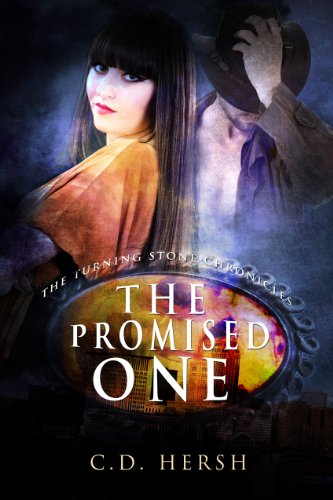
The Promised One The Turning Stone Chronicles Book 1
Blood Brothers The Turning Stone Chronicles Book 2
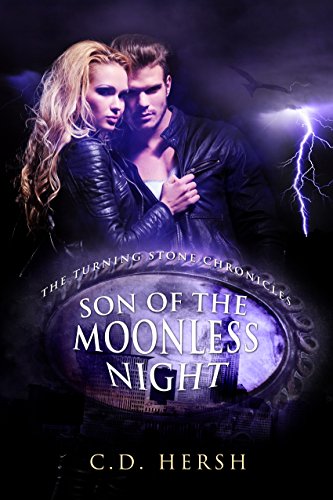
Son of the Moonless Night The Turning Stone Chronicles Book 3
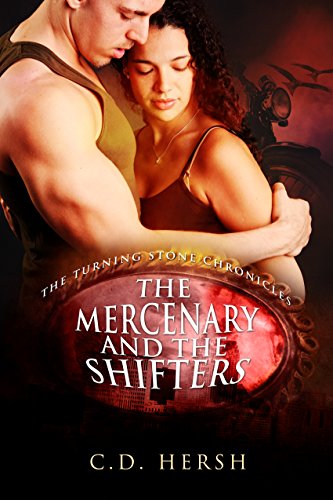
The Mercenary and the Shifters The Turning Stone Chronicles Book 4

Social Media Info:

Sunday, 8 December 2024

Guest Post: Writing and Christmas by C.D. Hersh...


We think writing and Christmas have a lot in common.

Preparing for Christmas is like writing a book—not that anyone gets much writing done in the weeks before the holiday. The concept, however, is the same; start early and stay on target. 

For an easy Christmas holiday: Shop all year long, especially on vacation where you can get one-of-a-kind items, and avoid the mall rush. Plan in advance. Knowing your menu weeks in advance and looking for recipes you can prepare ahead, freeze, or have on hand reduces stress in the kitchen and lets you enjoy the holiday too. Don’t want to cook ahead? Then remodel the kitchen (not before the holidays, of course) and get that second oven you’ve been wanting so all those green bean casseroles will fit in. Better yet, let someone else host. 

Get familiar with your Christmas dishes. Start using your Christmas dishes at the beginning of December so you don’t have to get them out of storage at the last minute. That 24 piece place setting of hollies and Christmas trees needs to be used more than once at Christmas dinner! 

Get next year’s Christmas cards as soon as they go on sale. After all, you have a pretty good idea how many you will need for next year, and they never go out of style. 

Begin next year’s Christmas letter now. Start in January and keep a running tally of the important things you want to include. If you bind the letters in a notebook you have a ready-made life journal. One stone, two birds. 

Make a goal list. Shopping done before Christmas, house cleaned thoroughly by the first weekend in December, trim the tree the day after Thanksgiving (since you don’t have to shop on Black Friday), Christmas cookies baked by the second weekend (or cheat and just buy them), the guest room readied right before your guests arrive, and so on. Tweak the list to fit your needs. 

For easy book writing: 
Write all year long, every day. Then when you take all that time off in December to get ready for the holidays, you won’t feel so guilty. 

Plan your book in advance. Some seat-of-the-pants writers claim too much planning takes the fun out of writing. We’ve done it both ways and have found thorough planning and plotting keeps us out of those pesky writer’s blocks. You just have to be willing to let your characters speak to you even if they don’t want to go where you’ve planned. 

Get familiar with your book and characters. Let the novel and your characters live with you daily. When you are thinking about the book all the time, the words come easily to the page and your characters’ voices sound more real. 

Get your ideas as soon as they come to you. Carry a notebook, or use your phone, to jot down everything that comes to mind about your current WIP or ideas for new books. Even if you don’t use the ideas now, they may work, with some tweaking, for something in the future. Writers are always writing and we need to capture those ideas when they come.

Begin your next book now. Writers who don’t think about future projects while they are still working on the current one run the risk of writer’s block for their next book. A running log of ideas, thoughts, characters, or anything related to the next books will make coming up with the stories easier. We brainstorm when we drive places, capturing all our ideas, good or bad, in a composition notebook. In a single composition book, we have at least 10 new ideas waiting to be developed. Will we write them all? Maybe not, but we have ready-made journal filled with possibilities.

Make a goal list. Set writing goals for yourself. Whether it’s 100 words a day, or 20 pages a day doesn’t matter. It’s the goal that counts. Tweak your goal list to fit your needs and you’ll be surprised how quickly those 100 words will turn into pages, and pages into chapters, and chapters into a book.

So, this holiday season, when you are laying your gifts beside the nativity, under your Christmas tree, give a gift to yourself. Promise to start writing early in the New Year and stay on target. Who knows, with perseverance and a little luck, you could be tucking your brand-new book under next year’s tree as a gift to someone else.

Here is a little about our shapeshifter series:

TITLE: The Turning Stone Chronicles

GENRE: Urban fantasy, Paranormal, Romance

HEAT LEVEL: Sensual

Three ancient Celtic families. A magical Bloodstone that enables the wearers to shape shift. A charge to use the stone’s power to benefit mankind, and a battle, that is going on even today, to control the world. Can the Secret Society of shape shifters called the Turning Stone Society heal itself and bring peace to our world?

Find out in the second edition of The Turning Stone Chronicles coming soon!

Putting words and stories on paper is second nature to the husband and wife co-authors whose pen name is C.D. Hersh. They’ve written separately since they were teenagers and discovered their unique, collaborative abilities in the mid-90s while co-authoring a number of dramas, six which have been produced in Ohio, where they live. Their interactive Christmas production had five seasonal runs in their hometown and has been sold in Virginia, California, and Ohio. As high school sweethearts, Catherine and Donald believe in true love and happily ever after. Which is why they write it!

When they aren’t collaborating on a book, they enjoy reading; singing; theatre and drama; traveling; remodeling houses (Donald has remodeled something in every home they’ve owned); and antiquing. Catherine, who loves gardening, has recently drawn Donald into her world as a day laborer. Catherine is an award-winning gardener — you can see some of her garden on their website.

They are looking forward to many years of co-authoring and book sales, and a lifetime of happily-ever-after endings on the page and in real life.

You can see excerpts of their books, connect with, and follow C.D. Hersh at:

Website

Facebook

Twitter

Sunday, 8 September 2024

Authors Need to Learn to Stay in Their Lane…


A good friend of mine invited me to jump on an Instagram show she does weekly. The topic was all about jealousy and envy, especially the green-eyed monster kind. I was intrigued, so of course I gave her a definite yes. As the conversation grew, I thought about how jealousy and envy seeps into the minds and actions of authors and writers. Yes, there’s comparison-itis, when an author compares his or her books and career to that of a highly successful author. How do they make it so easy? *Seethes* Why can’t I get a break? *Grumbles* What am I doing wrong? *Head desk* And the gut-punching laments go on and on. It’s like these famous authors got a free pass, and we’re looking for any scraps they can toss our way. But, what if I told you that there was a way to get the author life you’ve been working toward? It’s not easy by any means, but it’s doable.

Stay in your lane. That’s it. Told it was doable, but with today’s distractions an author has to deal with, it’s darned hard. Writing. Editing. Revising. Submitting. Rounds of edits. Book cover design. Formatting. Publishing. Book launch. Book promotion. Book marketing. Wash. Rinse. Repeat. The problem is we authors are too busy looking in the rear view mirror, side mirrors, odometer, gas gage, and in front of us, that it’s no wonder we can’t get to where we want to go. So strap on a pair of blinders and move forward. Stop for gas. In other words, rest and recharge. Check the GPS. Are you going in the direction you want to go or in circles? If you write for young adults, why are you in Stephen King’s lane? Yes, learn from him by all means, but don’t be envious of his accomplishments. They’re his and his alone.

Learn to pace yourself. The cliché, ‘Rome wasn’t built in a day’ holds merit even by today’s standards.
Do what’s right for YOU. Write what’s right for YOU, not what’s trending. The famous authors you love to hate got there through their own grit and merit. Yes, they had help. Yes, they had support. Yes, they made it. But only through their tenacity, and because an agent or publisher thought they were ready. Don’t let the green-eyed monster come out and destroy your integrity as an author or writer. Shove it in the back seat and buckle that beast in. You’re the driver. You’re in control of how you respond to how well other authors are doing in your circle or your world. Keep your focus. Stick to your plan. Stay. In. Your. Lane.

This advice isn’t easy, especially when you’re more interested in what other authors or writers are doing. The grass is always greener on the other side of the fence is not really what it seems. You didn’t see the work that was put in to actually make that grass perfect and luxurious. You don’t realize what successful authors have gone through to get to where they are now. Many flat tires, oil changes, recharged batteries, brake jobs, and a whole slew of other repairs and challenges have prepared them for the long haul of their publishing dreams. Learn from their journeys, but please, stay in your lane. You’ll be a better writer if you do.

Does the thought of another author’s success make you cringe with jealousy? Have you ever gone off course in your writing career because you decided to follow a famous author’s path instead of your own? When something amazing happens to an author you know personally, do you reach out and express your happiness for them? Or do you say nothing? Would love to read your comments. Cheers and thanks for taking the time to read my blog. I appreciate you!

Sunday, 11 August 2024

Guest Post: Gardening is like Writing by Paranormal Romance Author C.D. Hersh...


The warm days this week enabled us to take a stroll through the yard, another put-our-butts-in-the-writing chair avoidance tactic. We found a slew of winter weeds scattered throughout the landscape. Some tiny-leafed, prostrate thing has taken over a portion of the easement making it the greenest it has been in years. Buckhorn plantain spills out between the path steppingstones. Flat rosettes of chickweed carpet the stone gully in the backyard, and henbit, with its scalloped leaves and purple stems, juts out of the grass—or at least what passes for grass in the lawn. 

We’re letting the unidentified weed taking over the easement and the lawn. It’s green, low growing, and doesn’t look like it would need much mowing. But after an afternoon of surfing weed identification web sites (another avoidance tactic), we’ve come to the conclusion that we might have to dig out this patch of weeds and eradicate it every other spot we find. You see, if we’ve identified it correctly, we’re harboring shot weed, also known as hairy bittercress. Oh, it looks innocent enough, but when it sets seeds the slightest touch will send hundreds of seeds shooting out in a three-foot radius across the lawn into flowerbeds and pathways looking spots to hide and root. 

Fighting weeds in the garden is a full-time task. It starts in early spring with digging out winter weeds like plantain, chickweed, and henbit from the paths and flower beds. By the time we get those eradicated the dandelions rear their yellow heads. After that it’s pigweed and purslane and nutsedge and Canadian thistles and Jimson weed and ground ivy and goose grass. Spring and summer progress marked by an army of weeds marching through the garden. We hoe and pull and mulch and spray, and they just keep coming. The only thing that keeps them under control is persistent daily effort—and maybe a hard, hard freeze. 

Like the cycle of weeds in the garden, writers face different challenges along every stage of our careers. As soon as we think we have a handle on our craft and profession something new springs up and surprises us. The beginning writer’s weeds might be learning the basics of the craft or finding that story idea or dealing with writer’s block. For some it’s getting to the end of the book, or figuring out what to do with the sagging middle. For the more skilled, unpublished writers the weeds that need pulling could be social networking, getting an agent, or getting published. Whatever the weeds in your writer yard there’s one universal truth—they will always be there. Our job is to figure the best way to control them. 

We’re not a beginning writers. We know how to write. That has been reinforced with a number of contest placements. We have a good grasp of the skills and have been published. We know our stories and the characters. We even have books waiting in the wings to be written. But we still have writing weeds to pull—BIG ones.
    We haven’t finished our series—yet. We want to write in several genres, which presents branding problem and sometimes an identity crisis. While we have some social networking and internet connections there isn’t a large following wanting our books—one of the biggest weeds for a lot of writers. Currently, we spend more time blogging than writing the books.
Gertrude Jekyll, one of the most important British landscape designers and writers, once said, “There is no spot of ground, however arid, bare or ugly, that cannot be tamed into such a state as may give an impression of beauty and delight. It cannot always be done easily; many things worth doing are not done easily; but there is no place under natural conditions that cannot be graced with an adornment of suitable vegetation.” 

Gertrude’s advice applies not only to the garden, and all those weedy patches, but to writing as well. The road to success isn’t easy, but we can accomplish it. We can transform those bare, ugly pages into something overflowing with suitable vegetation (the best words and story we can make). When we finally reach that goal it’s worth the work. So, pull those weeds out of your writing garden and create something beautiful! We’re going to try this year to get rid of our biggest weed and finish our next book. What are the writing weeds that are stopping you from creating your masterpiece? Do you have a plan to pull them out? While you figure out what weeds to attack here’s an excerpt from the first book in our series.

Blurb for—The Promised One

ThePromisedOne2

In the wrong hands, the Turning Stone ring is a powerful weapon for evil. So, when homicide detective Alexi Jordan discovers her secret society mentor has been murdered and his magic ring stolen, she is forced to use her shape-shifting powers to catch the killer. By doing so, she risks the two most important things in her life—her badge and the man she loves. Rhys Temple always knew his fiery cop partner and would-be-girlfriend, Alexi Jordan, had a few secrets. He considers that part of her charm. But when she changes into a man, he doesn’t find that as charming. He’ll keep her secret to keep her safe, but he’s not certain he can keep up a relationship—professional or personal. Danny Shaw needs cash for the elaborate wedding his fiancée has planned, so he goes on a mugging spree. But when he kills a member of the secret society of Turning Stones, and steals a magic ring that gives him the power to shape shift, Shaw gets more than he bargained for. 

EXCERPT

The woman stared at him, blood seeping from the corner of her mouth. “Return the ring, or you’ll be sorry.”

With a short laugh he stood. “Big words for someone bleeding to death.” After dropping the ring into his pocket, he gathered the scattered contents of her purse, and started to leave.

“Wait.” The words sounded thick and slurred . . . two octaves deeper . . . with a Scottish lilt.

Shaw frowned and spun back toward her. The pounding in his chest increased. On the ground, where the woman had fallen, lay a man.

He wore the same slinky blue dress she had—the seams ripped, the dress top collapsed over hard chest muscles, instead of smoothed over soft, rounded curves. The hem skimmed across a pair of hairy, thick thighs. Muscled male thighs. Spiked heels hung at an odd angle, toes jutting through the shoe straps. The same shoes she’d been wearing.

The alley tipped. Shaw leaned against the dumpster to steady himself. He shook his head to clear the vision, then slowly moved his gaze over the body.

A pair of steel-blue eyes stared out of a chiseled face edged with a trim salt-and-pepper beard. Shaw whirled around scanning the alley.

Where was the woman? And who the hell was this guy?

Terrified, Shaw fled.

The dying man called out, “You’re cursed. Forever.”

Amazon buy links for all the books of the series 
The Promised One (The Turning Stone Chronicles Book 1) Blood Brothers (The Turning Stone Chronicles Book 2) Son of the Moonless Night (The Turning Stone Chronicles Book 3) The Mercenary and the Shifters (The Turning Stone Chronicles Book 4)  


Putting words and stories on paper is second nature to the husband and wife co-authors whose pen name is C.D. Hersh. They’ve written separately since they were teenagers and discovered their unique, collaborative abilities in the mid-90s while co-authoring a number of dramas, six which have been produced in Ohio, where they live. Their interactive Christmas production had five seasonal runs in their hometown and has been sold in Virginia, California, and Ohio. As high school sweethearts, Catherine and Donald believe in true love and happily ever after. Which is why they write it! 

The first four books of their paranormal romance series entitled The Turning Stone Chronicles Series page are available on Amazon. Their standalone novella, Can’t Stop The Music, is in the Soul Mate Tree collection with twelve other authors from various genres. 

When they aren’t collaborating on a book, they enjoy reading; singing; theatre and drama; traveling; remodeling houses (Donald has remodeled something in every home they’ve owned); and antiquing. Catherine, who loves gardening, has recently drawn Donald into her world as a day laborer. Catherine is an award-winning gardener — you can see some of her garden on their website. They are looking forward to many years of co-authoring and book sales, and a lifetime of happily-ever-after endings on the page and in real life.

You can see excerpts of their books, connect with, and follow C.D. Hersh at:

Website

Facebook

Amazon Author Page

Twitter

Sunday, 14 January 2024

3 Tips for Aspiring Authors by Young Adult Paranormal Author Leigh Goff...


Be Ready for Rejection

Even if someone had told me about this, I’m not sure I would have believed just how much rejection there would be. I even used Query Tracker to hone my agent and publisher searches, making sure my manuscript fit what each agent or publisher was looking for and that I followed their query rules. I can look back now and smile at how many rejection letters I received for my first novel, only because there were a few kind agents in the bunch who took the time to offer brief critiques on what I had submitted. 

I would send out 15-20 queries at a time, then I’d wait to hear back from the literary agents or small press publishers. I didn’t always get a response, but when I did, it was ultimately a rejection (cue sad music). With some of those rejections came little nuggets of advice. Trust me, those nuggets aren’t meant to be mean, they were bits of gold meant to improve my writing. I took that gold and made revisions. And I made revisions. And I made revisions. This book was my first attempt at writing a novel and I had a lot to learn. The rejections were disappointing and hurt at first, but the advice was necessary, appreciated, and it did make the book better. So I’d say be ready for rejection and be open to any advice a writing professional offers you. 


Be Prepared--the Publishing Process Moves Slowly

Once I received a publishing offer for my first book (woohoo!), I was slated for edits. There were three rounds of edits that had to fit the various editors’ schedules. Completing a round of edits does take time. Fortunately, I am good with deadlines, even when I had to take a chapter and rewrite it completely. Once that was done, the book went to their graphic designer for cover art, and it was typeset (set up for printing). The book was then scheduled for a release date that worked for the publisher and their other book releases. Plus they had to plan social media events leading up to and for the week of the release.  

My favorite part of this slow-moving process is the cover art. There’s nothing like getting to see what your “baby” is going to look like on a bookshelf! 


Don’t Give Up on Your Dreams

Dreams do come true, but they may not happen the way you expected or on your perfect schedule. 

After my first book was published, three months later the publisher went out of business. I was blessed to find another publisher that was excited to take on my novel along with my second book. My third book was discovered during a Twitter pitch party. That was a nice surprise. However, after the book was published the pandemic happened. That publisher suffered financial losses and went under. The company’s name was purchased by someone who had their own catalog of books, so that allowed me to take ownership of the third book. Finally, after years of hoping, I signed with a literary agent for my fourth book. I worked with her on the edits for that manuscript and it is currently out on submission to editors and publishers. 

When that book went on submission, I finished my fifth book which is a YA thriller set in coastal South Carolina. There are three sisters, an exotic garden, and Big Pharma causing lots of deadly trouble. I just love it. Fingers crossed that my agent finds the best homes for both of these books. My sixth book idea is being outlined at present. It will be a YA thriller set in D.C. and it’s going to be super fun to write! 


Leigh Goff
is an author of three published young adult novels and is represented by Lauren Bittrich. She is working on her next novel, a young adult thriller, while her current manuscript, Wicked Sweet, is on submission.

You can find her current published novels at Audible | Amazon | Apple   

Learn more about Leigh Goff on her website and blog. Stay connected on Instagram, Twitter, and LinkTree

Sunday, 19 February 2023

Good Morning Bread and the Comma Conundrum by Author Helen Carpenter...


During the editing of one of our books, commas turned into a major topic of discussion. Yes, well, my daughter and I were writers, what did you expect? We liked commas and we also liked to slice commas from our writing, so we have a conflict of interest. For example, in the first two sentences of this paragraph (and this sentence too), we used commas. We could have used a comma in the third sentence before the "and," though we chose not to. Either way would have been correct.

Another example is the title of this post. A comma would change the entire meaning. By omitting it, we imply (or say) the recipe below is a good (delicious) morning bread. Had we included a comma (Good morning, bread) we would be saying good morning to our bread. That would also fit, since the bread is definitely worthy of salutations.

Like bread, commas have lots of uses. You can splash them around in personal and geographic names, in numbers, before quotations that indicate speech such as "she said," and in lists. If you're the user of a certain word processing software, you can make your commas curly or straight and either style gets the job done.

I don't claim to be an expert on commas but I'd be happy to hear your take on this very important punctuation. Let's eat breakfast while we have the discussion. If you're not hungry, then we'll say, "Let's eat, breakfast."

Breakfast Bread
1½ cups dried mixed fruit (we used one 5-ounce package of mixed cranberries, cherries, blueberries, strawberries, and raspberries, and filled in the remainder with dried cranberries)
½ cup warm tea, any flavor
1 package regular yeast
½ cup warm water
2 tbsp. butter
½ cup coconut milk
3 tbsp. sugar
2 tbsp. honey
1 tsp. salt
1 egg
1 tsp. cinnamon
3 cups all-purpose flour
¾ cup nuts of your choice (we used pecans and pistachios)

Spray 2 loaf pans with cooking spray or line with parchment paper.

Soak dried fruit in bowl with warm tea. Set aside.

In separate bowl, add yeast to warm water. Set aside in a warm draft free location.

Melt butter.

Mix coconut milk, sugar, honey, salt, and egg. Add melted butter and stir. Next, add yeast and water mixture and stir.

Mix cinnamon and flour. Add to liquid ingredients and mix well.

Drain fruit. Add fruit and nuts to dough. Use your hands to mix, adding additional flour by tablespoons if necessary.

Let dough rise 1 hour. Punch down, divide in half, and shape into two equal loaves. Put loaves in prepared pans and let rise 40 minutes.

Heat oven to 350° F. Bake loaves 30 minutes. Cool in pan 5 minutes and remove to rack.

Serve warm or cold with butter or topping of your choice.

Once upon a time there was a mother/daughter author duo named Helen and Lorri, who wrote as HL Carpenter. the Carpenters worked from their studios in Carpenter Country, a magical place that, like their stories was unreal but not untrue. Then one day Lorri left her studio to explore the land of What-If, and like others who have lost a loved one the magical place lost much of its magic. But thanks to family, plus an amazing group of wordsmiths named Authors Moving Forward (AMF), the magic is slowly returning.

Helen Carpenter loves liking and sharing blog posts from other authors. She lives in Florida with her husband of many years  and appreciates everyday, especially those without hurricanes.

Stay connected on her blog and Facebook.

Sunday, 6 March 2022

The Secret Sauce in a Writer’s Tool Kit…


A while ago, I took a LinkedIn course that explained the secret sauce to a writer’s success. It was interesting, but this course seemed to be targeted toward journalism. Unfortunately, I didn’t finish the course as my ‘free’ window expired. I believe that the course was called ‘Write like an Elite Writer’, but don’t hold me to it. The teacher was well-spoken and knew his stuff. I watched enough of his course to glean what I needed, and pass along what I thought was helpful to my followers.

 So, what’s this secret sauce to an elite writer?

 Apparently there are four ingredients. Simplicity. Clarity. Elegance. Evocativeness.

 The teacher breaks down the ‘ingredients’ that make up the secret sauce in each module. Mostly I found his teachings loaded with common sense. It’s like in the book, The Secret, the author reveals that it’s ‘like attract like’ or the Law of Attraction that will help you manifest the life of your dreams. But we all know there’s more to that than meets the eye. You just don’t go sit on your couch, and ask for a brand new car to show up in your driveway. Though, that would be awesome! You must take action. Even if it’s baby steps. In the case of writing a book, that means putting in the sweat equity needed by showing up at your computer and getting the words down. Even if it’s only a paragraph a day, you’re still taking action.

 Here are ten takeaways I reaped from this course: 

·         Write with integrity. Never showoff or impress. Be true to yourself.

·         Simplify your writing by cutting out needless words.

·         Cultivate sensitivity to your readers.

·         Write for your readers.

·         Know your intent. Are you writing to inform? Persuade? Entertain? Inspire? Figure that out, and you’re halfway there.

·         Aspire for beauty. Get your ideas to flow more gracefully.

·         Balance the four ingredients like an artist. Don’t be obsessed with perfection, and try to relax.

·         Simplicity calls for tight writing, so avoid flowery language.

·         Get rid of careless repetition. Don’t ramble. Share only what the reader needs to know. Writers are notorious for TMI (too much information).

·         Don’t be a lazy writer!

The last point is a no-brainer. The above information is nothing new. The teacher did give examples and
solutions to make your writing cleaner and crisper. Still, many authors out there don’t heed the above advice, making their writing sloppy and unprofessional enough to let their readers down to the point of never buying another one of their books again. If you’re an author, don’t let this be you. If you’re a reader, share how you felt about the book (good or bad) through a review or even contacting the author personally. Trust me, we’d sure appreciate it!

I guess the takeaway from this course is that if you use the secret sauce (simplicity, clarity, elegance, and evocativeness) in your prose, you’ll raise yourself to the level of not just being an elite writer, but feeling that you’re one too. And isn’t that what we writers strive for? To better our best? If you’re a writer, do you incorporate any of these ingredients in your writing? Readers, have you ever dropped an author because their book lacked sensitivity? Would love to read your comments. Cheers and thanks for taking the time to read my blog. I appreciate you!

Sunday, 16 January 2022

10 Ways Authors Can Keep Their Characters in Turmoil and Their Readers Reading by C.D. Hersh...


We recently came across an old email entitled Instructions for Life. The 45 positive recommendations on the list are meant to help make one’s life better. By turning some of the instructions upside down and we created bad life advice that will keep novel characters in turmoil.

Next time things are going too smoothly with your WIP try throwing one of these in the mix.

    • 1. Let them believe in love at first sight, but fight it like it can’t exist.
    • 2. If they make a mistake, don’t let them be too quick to acknowledge it.
    • 3. Let them fall in love deeply, passionately, and with people they would never choose. They might get hurt, but it’s the only way to live life completely.
    • 4. Make them fight to keep their values, but make sure they do keep them. No one loves an un-heroic hero.
    • 5. Remember silence is sometimes the best answer and unanswered questions are always suspect.
    • 6. Let them dredge up the past; it makes for good conflicts.
    • 7. Let them read between the lines … a lot. Miscommunication thickens the plot.
    • 8. Let them slowly discover that not getting what they want is sometimes the best thing that ever happened.
    • 9. Never let them mind their own business. You can’t get in trouble that way.
    • 10. Remember that great love and great achievements involve great risks, and make them willing to risk everything to reach their goals.

Do you have a favorite trick for keeping your characters in turmoil?

Now if you want to see what we do with our characters how about checking out our series.


Putting words and stories on paper is second nature to co-authors C.D. Hersh. They’ve written separately since they were teenagers and discovered their unique, collaborative abilities in the mid-90s. 

As high school sweethearts and husband and wife, Catherine and Donald believe in true love and happily ever after. They are two hearts creating everlasting love stories.  


Catherine and Donald look forward to many years of co-authoring and book sales, and a lifetime of happily-ever-after endings on the page and in real life. 

Learn more about C.D. Hersh on their Website and at Soul Mate Publishing. Stay connected on Facebook, their Amazon Author Page, and Twitter.
Sunday, 15 August 2021

An Author’s Greatest Fan…and Critic!


I was fortunate to be interviewed by
LITREAL in July (2021) as part of their Essential Reads segment. It was through a connection on LinkedIn that got me this amazing opportunity with CEO and co-founder Dr. Shasikala Palsamy. LITREAL introduces English speaking authors to India (and the world), so I thought it was a way for me to expand my literary reach, and perhaps gain some new readers. Here’s a smattering of what they do for authors:

“LITREAL wishes to have a hands-on approach towards the study of literary works. LITREAL BROADCAST is the official YouTube channel of our institution. We have several live segments on a weekly basis where we interview writers across the globe. The input that writers of the current era provide us can really be useful to bring out the literary scholar in every individual.”

Honestly, I’m blushing. I was so out of my comfort zone during our interview! Despite the technical difficulties I experienced (I couldn’t see my video feed, but they could see me) we persevered and the interview went on as planned. I’ll include the full interview in this post, but there was one question I’d like to revisit, and wished I had answered differently.

That question?

Can you mention a person in your personal life who is your greatest fan and someone whom you may regard as your harshest critic?

The harshest critic was easy. That would be me. But my greatest fan? Wait…what? I honestly had no idea, so I rattled off a few names of girls I knew that had read my books and loved them. After the interview, it hit me like a ton of paperbacks. I was my greatest fan. All authors must be the champions of their own stories or what’s the point of writing?

As promised, here’s the interview with LITREAL. It was a scary-wonderful, humbling, and just plain old fun experience. You can hear my enthusiasm rise out of my voice at times, and to my surprise, it made me feel like I belong in this crazy literary world. Enjoy!

The actual interview:


If you’re an author, do you agree with me about being your own greatest fan and harshest critic? I’d love to read your comments. Cheers and thanks for taking the time to read my blog. I appreciate you!