Showing posts with label Writing Business. Show all posts

Sunday, 21 April 2024

Authors: Do We Really Need to Go All In With Our Book Marketing Strategy…

Book Marketing is a Gamble for Many Authors
Fed up with doing Facebook ads that at one time gave me great reach and amazing clicks, but no buys, I decided that these kinds of ads didn’t serve me anymore. So, in March (2024), I asked for feedback from my fellow authors on what they did that works for them in their book marketing and promotional world. I received quite a lot of responses—especially from my Facebook groups—and decided to put together a list of their responses. To give you the gist, here’s the original call to action I put out on my social media accounts:

I’m searching for other ways to market and promote my books, since Facebook ads don’t seem to be playing nice, and don’t serve my purposes anymore. So, I thought I’d ask my fellow authors what you do to get your books out there and into the hands of your readers, beyond the usual social media posts on Facebook, Twitter, and LinkedIn I see throughout my feeds.

For example, do you pay for ads on Twitter or LinkedIn? If so, do they work for you? Have you ever hired a promotional specialist or company (which can get quite pricey) to do your book marketing? If so, what was the experience, and were they worth it? Or do you do your own marketing, scheduling your posts ahead of time? I’d really like some solid advice, and frankly I’m tired of being approached by these so-called ‘marketing specialists’ on all my social media accounts.

Thanks in advance for any advice or suggestions you can share. I appreciate it!

The response was immediate. My feeds filled up with helpful advice, and other authors waiting in the wings to know what magic-marketing-bullet would be best for them. Turns out this book biz is NOT a one-book-fits-all kind of marketing strategy. I knew all along that it wasn’t. I was just interested in seeing what other authors do out there, so I could make a conscious and rational decision on what’s best for ME. That said, below is most of the feedback I received. Much of these ideas I’ve done, but there are some that I haven’t, and may give them a go. In the long run, you must decide what’s best for YOU…

·         Start an email list and newsletter. If you have done so, continue to build it.

·         Don’t pay for subscribers—instead, engage with readers in genuine ways.

·         Get out there in person. Meet other writers, go to events and conferences, especially events that include both authors and readers. Always bring a signup sheet or QR code for your newsletter signup.

·         Shop at Indie bookstores. Be a part of the literary conversation.

·        Consider doing Amazon ads. Apparently, Bryan Cohen offers free Amazon ad courses that usually happen quarterly. Check out when the next course is available here: https://www.facebook.com/bestpageforward/reviews

·         Other advertising ventures are BookBub Feature Deals (which can get quite pricey) and BookBub ads. Apparently, most authors said to stay away from Twitter or LinkedIn ads.

·        Promotional and review sites such as NetGalley, Fussy Librarian, Written Word Media, Bargain Booksy, FreeBooksy, BookFunnel, and Hello Books just to name a few. Price points vary, so do your research.

·         In-person events such as craft shows, fairs, markets, and special events like holidays.

·        Podcast interviews. An author friend pays $15 a month and gets two lists of ten podcasters weekly who are looking for guests. Here’s the link: https://podcastguests.com/

·        YouTube appearances or having your own show. Depending on your personality, helpful content, and author guests, this may be the way to go for you.

·         Guest blogging or working with book bloggers for reviews.

·        Speaking engagements based on your genre. So, if you write for children or teens, schools would be a good place to start.

·         Getting books into your local library network.

·        Book signings at your local bookstore, grocery stores, fundraisers, or anywhere else that’s connected with the setting, content, and genre of your books. Think outside the box for this. Does your book have a shelter animals slant? How about at a local pet supply store? Cozy mystery with a baker as the main character? Check out coffee shops or local bakery stores in your area. The possibilities are endless.

·         Garnishing paid book reviews through Booklist, BookPage, ForeWord, Kirkus, Library Journal, Publisher’s Weekly, and Shelf Awareness to name a few.

·         Promotional specialists or companies. A word of warning on this: if these people approach you, they’re most likely crossing a boundary or invading your virtual space. You’re the one who should be contacting them.

·         Paying a publicist. This one can get expensive, with prices ranging from $1250 to over— are you sitting down—$10,000 for a four to five-month campaign. Yikes! But, depending on the book, and if it’s worth your time and investment, then go for it!

·         Last, but not least, the tried and true method: Word of Mouth. Works. All. The. Time.    

Hmm. So many ideas, so little time to actually write those books to market. What a conundrum! With all this wealth of information listed above, I bet you’re wondering what marketing strategies I’ll be using moving forward. First, an admission – I don’t have an email list. I’ve resisted having one for so long because frankly, I didn’t want to do the extra work involved with sending out a newsletter with barely anything to say. Book marketing expert Sandra Beckwith advises to start and build an email list for the simple reason that if your pet social platform disappears or crashes, you lose everything. But not your email list. You own that sucker. Plus, it’s an excellent way to get to know your readers and have genuine conversations with them. Makes sense, but to be honest, I don’t feel this is the best use of my book marketing time.

However, If you’re interested in starting an email list or building your existing list, writing coach and speaker, Colleen M. Story has a couple of great articles to whet your book marketing appetite with HERE and HERE. Check them out when time permits.

So what am I going to do? Nothing. At least for now. I’ve decided to take a break, take a breather, and take myself out of the game of feeding all those book marketing ploys manipulating authors out of their hard-earned money. My former publisher used to say, Money flows to, not away, from the author. Wouldn’t that be nice if that was the norm? The best advice I received was from author Vonnie Hughes, a dear friend from New Zealand, who offered, What about just writing because you can't help it and not writing to be published but just writing for YOU?” In a perfect world, wouldn’t that be amazing? I may just heed her sage advice. As a life-long learner, I strive to do better when I can, and hope what I learn, I can pass along to others. At least, that is my wish.

Does the thought of marketing or promoting your books make you cringe? Do you have an email list? Are you tired and overwhelmed with all the marketing strategies out there, that you chose to do the bare minimum or nothing? Is the continual expense of doing book promotions sucking the joy out of being a writer for you? If so, I totally understand, and would love to read your comments. Cheers and thanks for taking the time to read my blog. I appreciate you! 

Sunday, 21 February 2021

Guest Post: A Writer's Alphabet by C.D. Hersh...

Over the years we have learned a great deal about writing and what it takes to survive in this business. Today we would like to share those ABC's with you.


Affirmation¾As writers we get a lot of rejection.  It helps if we have some affirmation.  So, the next time you get a good comment from a critique partner, an editor, or even your child who says “You’re a good writer, Mommy,” tuck it away in a special file.  Then when you feel like chucking the computer out the window and giving up on writing, pull out those affirmations and tell yourself, “ I can do this.  I am a Writer!”

Brainstorming¾Brainstorm without putting checks on your imagination.  Don’t be afraid to think of the most outrageous ideas when you’re brainstorming.  “What if” may be the best tool a writer has to stimulate his imagination.

Creativity¾Never let anyone say you don’t have creativity.  The very fact that you want to write shows you have creativity.  Just keep thinking about your story, asking “What if”, and letting all your skills and thoughts take you into the world where your characters live.  Eventually, you’ll find, or create, what you need.

Discipline¾Every writer needs it; most of us do not have it.  The discipline to sit down in front of the computer every day, even when you don’t feel like it, will get you through the rough parts of your stories.

Edit¾ISSAC B. SINGER said, “The wastepaper basket is the writer’s best friend.”

Think of yourself as a writer first and an editor second.  Write, rewrite and rewrite some more.  Never, ever, send that first draft to an editor.

Fodder¾Everything you see and hear and everyone you meet is fodder for a writer.  Writers have great excuses for eavesdropping on the world.  Ideas, character sketches, names, plot twists¾you name it and you can find inspiration for it among your family, friends and the guy sitting next to you in McDonalds. Don’t let them know what you’re up to, however.  If they recognize themselves in your next story they may never speak again when you’re around.

Grammar¾Webster defines grammar as “a study of what is to be preferred and what is to be avoided in inflection and in syntax.”  When you present your manuscript make sure the grammar is correct.  Don’t depend solely on your computer grammar check; its suggestions are not always right.  Instead, invest in a good English or grammar handbook and use it.  The Associated Press Stylebook and Libel Manual has a nice section on grammar and punctuation that I use all the time.  If you have trouble with grammar find a friend or an adult enrichment class that can help you brush up on your grammar.  You don’t have to be able to diagram a sentence, but you do have to be able to put it together correctly.  That goes for punctuation too.

 Hope¾Hope should spring eternal in the hearts of writers.  As long as you have something circulating among editors you should always have hope. Never give up, not even when you have enough rejection letters to wallpaper your office.

Ideas¾There are no bad ideas.  Even the worst idea can provide a springboard for something better.  Keep all your ideas in a file so you can pull them out whenever you have a dry spell.  You’ll be surprised what new, and better, ideas might spring from an idea you considered trashing.

Journaling¾Journaling is a great way to keep your writing flowing, especially on those days when you can’t, or don’t, get to the computer.  Write at night, in the morning, in the bathroom, or any place where you and your journal can go.  Put down your emotions, your thoughts, impressions, snatches of conversations, or visual images.  All these things can be story sparkers or sensory descriptions you might be able to use in some other writing.

Know How¾Like every profession, writing is a job that takes skill.  You can’t be an electrician or a plumber without learning the ropes¾the skills and the tricks of the trade.  That’s true in writing too.  To become a success as a writer you have to study your craft, learn the best way to write an article, a scene, a chapter, a book.  You have to know how to structure your plots and characters, and you have to become knowledgeable about the business.  Learn all you can about writing and the writing business so you can succeed.

Laughter¾Keep a sense of humor about yourself and your writing.  There will be plenty of times that you will get your feelings hurt as a writer¾someone won’t like your baby, a critique will rub you the wrong way, an editor might ask for umpteen revisions.  If you can face life, and writing, with humor you’ll be able to get through most anything¾and even have some good story material in the process.

Marketing¾If you want to sell, then know your market.  Don’t waste your time, and an editor’s time, by sending manuscripts that aren’t suitable for the publication.

Networking¾Do it!  Network with anyone in the writing business that you can.  Editors are besieged with unsolicited manuscripts.  Any time they can connect a face, organization, or conference to you, you are one step ahead of the game.  Take every opportunity to meet, talk with and mingle with editors.  Don’t forget networking with other writers too.  You can’t know all there is to know about the publishing world and what is going on.  Take advantage of any information other writers have to offer.  Getting published is not always about talent.  Sometimes it’s also about being in the right place, or submitting to the right place at the right time.

Organization¾If you can’t find the computer, your copious notes, or the paper and pencil under the clutter in your office, then you can’t write. The more organized you are the less time you’ll spend hunting and the more time you’ll have for writing.

Perspiration¾Don’t wait for the Muse.  Writing is one-percent inspiration and 99-percent perspiration.  If you wait for inspiration, you might as well be taking a nap while you’re sitting in front of you computer.

Query Letter¾Queries can be more intimidating and frustrating than writing the whole darn book.  I know plenty of writers who dread the “Query Letter.”  The query is an editor’s first glimpse of you and your story.  Consider it an important, but necessary, evil of your craft, and learn to conquer it.  The Writer’s Market has great examples of how to write a good query.

Reading¾“A room without books is like a body without a soul.” Cicero 

A writer who doesn’t read will soon find himself out of touch with the very world for which he is writing.  Read, read, and read everything that you can.  Fiction, non-fiction, newspapers, magazines, cookbooks, cereal boxes, dictionaries, children’s literature, and certainly read in whatever genre in which you want to write.

Solitude¾The life of a writer is a solitary one. “Family, friends, and society are the natural enemies of a writer.  He must be alone, uninterrupted and slightly savage if he is to sustain and complete an undertaking.” LAWRENCE CLARK POWELL  Learn when, and how, to shut the door and lock out the world.  Find the time and the place that works best for you.

Tenacity¾“A professional writer is an amateur who didn’t quit.” RICHARD BACH

            Dr. Seuss had his first book rejected 64 times and was ready to toss it in the trash.  A friend convinced him to try just one more publisher¾the rest is history.  Seuss could have remained an amateur if he had given up.  Don’t give up.  You might miss your chance at a bestseller.

Universality¾Want to sell?  Then make sure your stories and articles have a universal appeal. There is nothing new under the sun, just a different way to tell it.  Stories with universal appeal never go out of style.

Virgin Reader¾Every writer needs one of these.  We get so close to our “babies” that we can’t see their flaws.  But, believe me, an editor will.  So, find someone you trust to give you fair, constructive criticism¾someone with a fresh set of eyes to look at your writing¾and let them be a Virgin.

Write¾“Planning to write is not writing.  Outlining a book is not writing.  Researching is not writing.  Talking to people about what you’re doing, none of that is writing.  Writing is writing.” E. L.  DOCTROW 

‘Nuff said.

Xercise¾(Yes, I know it’s not spelled that way) Writing takes a lot of mental power but doesn’t exercise the other body muscle groups (except the fingers).  So, to keep yourself healthy¾and maybe even sneak in some writer avoidance time¾take time to exercise.  You’ll come back to the keyboard refreshed and awake. A bonus¾getting the endorphins revved can even kick your brain into gear and help you solve whatever writing problem you’ve been facing.

Ying and Yang—A writer needs balance, in his life and on the page. Too much time alone with the book isn’t a good thing. Neither are pages of narrative or back story with no dialogue or action. Find that happy medium in your life and your literary pursuits.

Zeal¾“Writing is a dog’s life, but the only life worth living.” GUSTAVE FLAUBERT

If a writer’s “dog’s life” isn’t what you want, then you had just as well close your notebook, break your pencil in half, and find something else to do with your life.  Zeal, passion and a love of your work will keep your writing fresh and alive.  If you don’t like what you are doing you probably will not succeed at it.

Please allow us to introduce you to our paranormal suspense series The Turning Stone Chronicles.

The Promised One (The Turning Stone Chronicles Book 1)

Blood Brothers (The Turning Stone Chronicles Book 2)

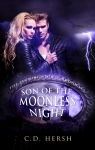
Son of the Moonless Night (The Turning Stone Chronicles Book 3)


The Mercenary and the Shifters (The Turning Stone Chronicles Book 4)


C.D. Hersh–Two hearts creating everlasting love stories.
Putting words and stories on paper is second nature to co-authors C.D. Hersh. They’ve written separately since they were teenagers and discovered their unique, collaborative abilities in the mid-90s. As high school sweethearts and husband and wife, Catherine and Donald believe in true love and happily ever after.

They have a short Christmas story, Kissing Santa, in a Christmas anthology titled Sizzle in the Snow: Soul Mate Christmas Collection, with seven other authors.

They are looking forward to many years of co-authoring and book sales, and a lifetime of happily-ever-after endings on the page and in real life.

Social Media Info:

Monday, 30 December 2019

2020: A New Decade. A New Perspective…

First Book Launch in 2012

Wow, that decade zoomed by! I honestly don’t know where those ten years went, but what I do know for sure (quoting Oprah) is that a lot has happened to me personally and professionally since 2010. I’ve lost some people (and pets) by death, and by choice (toxic relationships), worked with two publishing companies and one literary agency, had my hopes dashed only to realize that it was for my highest best anyway, and transitioned from living in cottage country to surviving in the suburbs of sultry, southern Ontario. I’ve had a total of five books published (Woohoo), done book readings without breaking out in a sweat or fainting, and though self-doubt creeps in from time to time, I’ve learned what self-love really means in this crazy, on demand world we are presently living in. Rather than go on and on, I thought I’d share my decade experiences by breaking it down for you in three categories:

What have I accomplished in the last 10 years?

So much! I started my blogging journey May 4th, 2011 before I even had a publishing deal—which BTW—I received in August of that same year with a new publishing company called Musa Publishing. This is where I earned my author chops, so to speak. What was expected of an author—which was pretty much everything from promoting to marketing to creating a social media presence to writing my next book, and what a publisher did for their authors. I went from zero experience on the internet to feeling quite comfortable navigating through cyber-space. I received a grant to help build a website to house my first book: The Last Timekeepers and the Arch of Atlantis and the ones that followed, and celebrated the best book launch ever on May 19th, 2012 surrounded by friends and family who knew how hard I’d worked trying to get published for over fifteen years. I wrote the prequel to The Last Timekeepers series, and received another contract with Musa Publishing. Then…everything changed.

 A few Mirror World Publishing Authors
We moved from our house on the lake to a house in the suburbs in the summer of 2014. What I couldn’t have foreseen was Musa Publishing would close their doors in February 2015, leaving over 300 authors stranded, without contracts or support. Thankfully, I had attended a book expo in November 2014, and there I met my future publisher, Mirror World Publishing. In the last five years, we’ve worked together to bring two young adult book series out into the world, The Last Timekeepers time travel adventure series, and Mysterious Tales from Fairy Falls teen psychic mystery series. And since then, I haven’t looked back.

Now that the fruits of my labors are realized, I know I need to continue on my path to write, promote, market, engage, and connect with people who are looking to escape into my fictional worlds. So, it is my hope to write books that will entertain, educate, and inspire both young and young-at-heart readers for generations to come.

What are the lessons I learned in those years?

Being an author isn’t for the faint of heart. I’m so not kidding. The biggest lesson I’ve learnt is that no one is going to care more about your book than YOU do. Period. So do the tough stuff. Get your hands dirty. Experiment. Beg for book reviews. Share helpful content. Be kind to others going through the same thing. Always add value. Go the extra mile. Think of all these acts as your karma bank account, and it will compound by leaps and bounds.

Make a business plan. Remember, writing is a business. So treat it this way. I began writing my ‘Master Business and Life Plan’ on March 9, 2011, when I was researching how to start up a blog. This plan has evolved and grown throughout the last nine years, and will continue to do so. I’ll admit, not everything gets crossed off the plan, but it does give me an overview on where to adjust for the future, and where I’d like to be at the end of the year.

Get comfortable with being uncomfortable. At the beginning of this decade, the thought of standing up in front of an audience to read an excerpt or visit a school to share my writing journey with students made my teeth itch and want to hide among the shadows. But, I authored up. I faced my fears, and pushed myself enough to get over whatever it was that made me feel this way. Lack of self-confidence and self-esteem be damned. I learned to love who I’d become, what I’d accomplished, and where I’m heading these past ten years. And from where I stand, the future looks so bright, I’m gonna need shades!

The Last Timekeepers Time Travel Adventure Series (so far...)
What do I need to let go of, drop or release that doesn’t serve me?

This is a BIG one: Stop comparing myself to other successful authors. By all means, I should learn from them because success leaves clues, but my journey is not the same as their journey or experiences, so there’s really no comparison. I must drop this, put on a pair of blinders, and focus on MY path.

This is a HARD one: Approval from others. Since we were children, all we wanted was attention —first from our parents, then friends, later co-workers and bosses, and loved ones. We’re hard-wired for this. The truth is that the only person whose approval really matters is our own. That’s it. We need to have our own backs. Trust ourselves enough to stand in our truth. This will definitely be a work in progress for me.

This is an HONEST one: Releasing expectations. When I was a girl, I had a plaque hanging on my bedroom wall that said, ‘Blessed are those who do not expect, for they won’t be disappointed.’ Now that’s some sage advice! So, going back in time, as I love to do when writing my books, I realize having expectations gets in the way of what the Universe has planned for me. Adopting the mindset, ‘Everything happens for me, not to me’ has helped tremendously, and I know that by releasing expectations, I make room for more positive energy to come into my life.

Released in 2017 and 2019: Mysterious Tales from Fairy Falls (so far...)
As this decade closes out, I encourage you to ask these three questions, and see how far you’ve come. You just might realize that ‘you’ve come a long way, baby’! Please share your findings if you feel obliged. Would love to read your comments. Cheers, and thank you for reading my blog. Happy New Year, and wishing you and your loved ones, health, happiness, wealth, and all the best in the next ten years ahead!

Monday, 23 April 2018

What Authors Can Learn from the Demise of Sears…


Last year, I was shocked to find out that Sears Canada, a company that has been in business for over 60 years, was filing for creditor protection in June. They closed a total of 59 stores with the Sears brand name, resulting in 2900 employee layoffs. Then, the domino effect happened. In October, Sears decided to close all their stores permanently in Canada, and went into the liquidation process until January 2018, laying off the remaining 11,240 employees. Their pensions, like the company they had worked so hard for over the years, dissolved before their eyes. I’m still shaking my head. Growing up, Sears was an institution, a shopping mecca, and a place you could find quality products at a fair price. So, where did Sears go wrong?

Author friend and colleague, Anne Montgomery has a theory about that, and you can read her blog post HERE. But I suspect there’s more to it than sloppy service or guilt-ridden customers. This goes much deeper. Sears Canada began its operations as Simpson-Sears Limited in 1952 as a catalogue and mid-market suburban retailer. This was their target market. The store introduced ‘We Service What We Sell’ as their slogan, backed up by a highly-trained nationwide corps of service technicians. Smart move. They brought in their own brand names (Kenmore, Craftsman), got into malls, expanded their products, and at the end we’re even planning to sell groceries (think Walmart). Sears parted ways from Simpson (purchased by the Hudson Bay Company in 1978) continued to rebrand, changing their logo a number of times, and trying new store formats before deciding to throw in the towel. In the end, there just wasn’t enough cash flow to meet the company’s financial obligations over the next year. Case closed. Doors shut.

So, what do AUTHORS need to learn from the demise of this department store dinosaur?

Sears didn’t evolve. They stopped filling a need. Their target market changed and they didn’t grow with them. Sears didn’t look at the big picture. Blame the Millennials if you wish, but their shopping habits are not the same as their parent’s. Brick and mortar stores and malls were a meeting place when I was younger. Now, not so much. Monster on-line businesses like Amazon are taking over, and authors have a place to easily publish their reading wares with a push of a few buttons. Walmart is surviving by offering low prices and great service. They fill a need, and market it well. My guess is that Sears simply ran its course. Smart businesses compete by innovating with more products and service.

Authors should be smart too. Build a brand that fills a need for your target market. Choose a price point, experiment with ways of reaching more readers, and always keep adding more products (books) to your author store (website). Keep your overhead low, and always continue to invest in your business. Offer quality service (great editing and an eye-catching book cover) and most importantly write an awesome story that will keep your customers (readers) visiting your website and buying your books for years to come.      

There are so many lesson authors can learn from a company when they go belly-up. The trick is to make sure you stay afloat long enough to watch your ships come in. That is my hope for all you writers out there. Cheers and thank you for reading my blog!

Monday, 30 May 2016

A Glimpse into my Writing World…

I thought I’d try something completely different (cue the Monty Python music), and give my readers and followers a glimpse into my writing world by asking my ‘author’ self these five fun questions…

1.      Given unlimited resources, what would be your ideal writing environment?
Hmmm…unlimited resources? I honestly don’t know how to answer that because I DO have the perfect writing environment. But if I had a choice, I’d like a condo in Florida for the winter months, so I could continue to enjoy the warm weather all year round! After all, didn’t Hemingway have a place down there? Grin.

2.      Where do you actually write?
I set up a writing office in my home. Since we’re empty nesters, one of the bedrooms was a perfect fit to fill with my book shelves, books, a reading chair, L-shaped desk, computer, printer, and story board. I don’t have a great view, but I figure it helps keep me staring at my computer and pounding the keys. Wink.

3.      How did you come to write The Last Timekeepers series?
Both the idea and inspiration came to me through a dream I had around 1998. In this dream, I saw seven arches, and there were seven people (five kids, two adults) with crystals in their hands, walking up to these arches. It definitely had an Indiana Jones feel to it. At that time, I was writing a paranormal romance (before there was a distinct genre) and had no intention of writing a middle-grade/young adult book like The Last Timekeepers. But this idea kept growing in my mind, and wouldn’t leave, like some mystical force pushing you from behind. So, I thought I’d challenge myself and write a novel—a series—that would appeal to my son, who at the time was the target age of my audience. I’ve always loved the time travel genre, so I imagined the arches I saw vividly in my dream as time portals. It was a no-brainer for me.

4.      What was the hardest part of writing your book, and how did you overcome it?
Hardest part? I think starting from scratch and learning the process of actually writing a book. I’m strong at dialogue, so that part wasn’t a problem, but I lacked in novel structure and how to construct a novel. I had to learn from the ground up, so I went to night classes, joined writing workshops, read books on writing to hone my skills enough to get the first draft done. And then when the book was complete, I had to learn how to edit, revise, and redo. This part of writing a novel is an ongoing work in progress! LOL!

5.      What is your favorite late night snack?
I’m gonna say a bag of party mix—the cheesier the better! I do love my salty snacks! And thankfully, I don’t indulge that often.

The writing business can be messy and hard at times, but it can also be fun and rewarding. Giving readers a small glimpse into an author’s life can provide an avenue for engagement, life-long connections, and fans for life. Cheers and thank you for reading my post!