Showing posts with label The Castle. Show all posts

Sunday, 14 July 2024

Guest Post: Picking a Genre is No Easy Task by Author Anne Montgomery...

The moment I mention the impending arrival of a new book, prospective readers ask, “What’s the genre?”

“Well, um…it’s hard to say,” I respond, staring at my shoes, wondering why such a simple question has no equally simple answer.

I have a tendency to write stories without giving thought to where they might fit in literary culture.  So far, my titles have been variously listed as soft-thriller, contemporary fiction, romantic suspense, historical fiction, women’s fiction, and young adult fiction. So you can see why labeling my work tends to make my head spin.

Still, identifying a genre for your novel is important.


A Light in the Desert is a suspense novel.

“We use genre as a way to identify the category of a book. Where it should be sold in a store. Or who its competition will be,” long-time literary agent Steve Laub wrote in his blog article Does Genre Matter? “The best way to describe it is to say that publishers and booksellers sell books out of boxes. The boxes are labeled “Romance” “Thriller” “Mystery” etc. Before we resist that exercise I would claim that we consumers buy books out of those boxes. It is quite possible that the boxes were created by us (the consumers).”


Wild Horses on the Salt has been called women’s fiction and suspense with a touch of romance.

There is some dispute about which English book should be called the first novel. Some believe Miguel de Cervantes’ Don Quixote of La Mancha, published in 1605, deserves the honor. Others opine that Daniel Defoe’s 1719 Robinson Crusoe should get the nod. Either way, neither author had to think too hard about genre.

“In 1719, when “Robinson Crusoe” appeared, many people considered “the novel,” in itself, to be a genre,” said Joshua Rothman in his The New Yorker article titled A Better Way to Think About The Genre Debate. “The novel was a new thing—a long, fictitious, drama-filled work of prose—and its competitors were other prose genres: histories, biographies, political tracts, sermons, testimonies about travel to far-off lands. What set the novel apart from those other prose genres was its ostentatious fictitiousness.”

 Clearly, modern-day authors can find labeling their work infinitely more complicated than those early novelists.  Look at today’s overwhelming number of possible fiction genres. The Book Industry Study Group’s list of fiction topics includes approximately 140 genres, all of which can be combined in what seems like a never-ending number of possibilities.


The Scent of Rain was marketed as young-adult fiction.

I’ll admit, sometimes I’m jealous of my romance-writer friends, their covers bursting with muscled torsos and over-flowing bodices that leave not a hint of confusion about what type of story resides inside. Still, as difficult as pinning down that perfect genre might be, there’s no way around it, especially if you want to contact agents, or publishers, or editors, or reviewers, because those folks are pretty specific about the types of book they’re interested in. If you want to be considered an amateur in the publishing world, go ahead and send a query about your sci-fi, apocalyptic, young adult romance to someone who has made clear their genre of choice is Regency historical fiction. (And you were wondering why you hadn’t heard back.)

While some authors may be tempted to leave the genre decision to others, remember you wrote the book. You know the story and the characters better than anyone. Ultimately, you should choose. An article on the blog Rock Your Writing called How To Figure Out Your Book’s Genre suggests you consider, “who is the mostly likely to seek out this particular type of book, buy this type of book, and enjoy this type of book.”

While the decision on genre is yours, it’s the reader we authors need to consider, because, as Laub pointed out, if our “baby” is in the wrong box, maybe those readers won’t find it.


The Castle is contemporary women’s fiction/suspense

A reporter seeks information on an eleventh century magician and discovers that black market sales of antiquities can lead to murder.

In 1939, archaeologists uncovered a tomb at the Northern Arizona site called Ridge Ruin. The man, bedecked in fine turquoise jewelry and intricate beadwork, was surrounded by wooden swords with handles carved into animal hooves and human hands. The Hopi workers stepped back from the grave, knowing what the Moochiwimi sticks meant. This man, buried nine-hundred years earlier, was a magician.

Former television journalist Kate Butler hangs on to her investigative reporting career by writing freelance magazine articles. Her research on The Magician shows he bore some European facial characteristics and physical qualities that made him different from the people who buried him. Her quest to discover The Magician’s origin carries her back to a time when the high desert world was shattered by the birth of a volcano and into the present-day dangers of archaeological looting where black-market sales of antiquities can lead to murder.

This is my latest release. It’s Native American Literature and U.S. Historical Fiction. Picking a genre definitely is not easy.


The past and present collide when a tenacious reporter seeks information on an eleventh century magician…and uncovers more than she bargained for.

In 1939, archeologists uncovered a tomb at the Northern Arizona site called Ridge Ruin. The man, bedecked in fine turquoise jewelry and intricate bead work, was surrounded by wooden swords with handles carved into animal hooves and human hands. The Hopi workers stepped back from the grave, knowing what the Moochiwimi sticks meant. This man, buried nine hundred years earlier, was a magician.

Former television journalist Kate Butler hangs on to her investigative reporting career by writing freelance magazine articles. Her research on The Magician shows he bore some European facial characteristics and physical qualities that made him different from the people who buried him. Her quest to discover The Magician’s origin carries her back to a time when the high desert world was shattered by the birth of a volcano and into the present-day dangers of archeological looting where black market sales of antiquities can lead to murder.

Former television journalist Kate Butler hangs on to her investigative reporting career by writing freelance magazine articles. Her research on The Magician shows he bore some European facial characteristics and physical qualities that made him different from the people who buried him. Her quest to discover The Magician’s origin carries her back to a time when the high desert world was shattered by the birth of a volcano and into the present-day dangers of archaeological looting where black market sales of antiquities can lead to murder.

Amazon Buy Link


Anne Montgomery has worked as a television sportscaster, newspaper and magazine writer, teacher, amateur baseball umpire, and high school football referee. She worked at WRBL‐TV in Columbus, Georgia, WROC‐TV in Rochester, New York, KTSP‐TV in Phoenix, Arizona, ESPN in Bristol, Connecticut, where she anchored the Emmy and ACE award‐winning SportsCenter, and ASPN-TV as the studio host for the NBA’s Phoenix Suns. Montgomery has been a freelance and staff writer for six publications, writing sports, features, movie reviews, and archeological pieces.

When she can, Anne indulges in her passions: rock collecting, scuba diving, football refereeing, and playing her guitar.

Learn more about Anne Montgomery on her website and Wikipedia. Stay connected on Facebook, Linkedin, and Twitter.

Sunday, 5 November 2023

Guest Post: November is National Caregivers' Month by Author Anne Montgomery...


Forty-eight million Americans serve as caregivers for friends and family members in need.

I have always considered myself strong and quite capable of taking care of myself, but life has a way of swatting our perceptions away. I came to this conclusion when I was stricken with Covid-19—despite being fully vaccinated— a broken leg that rendered me unable to walk for two months, and an eye infection that affected my vision. (No, I never do anything halfway.)

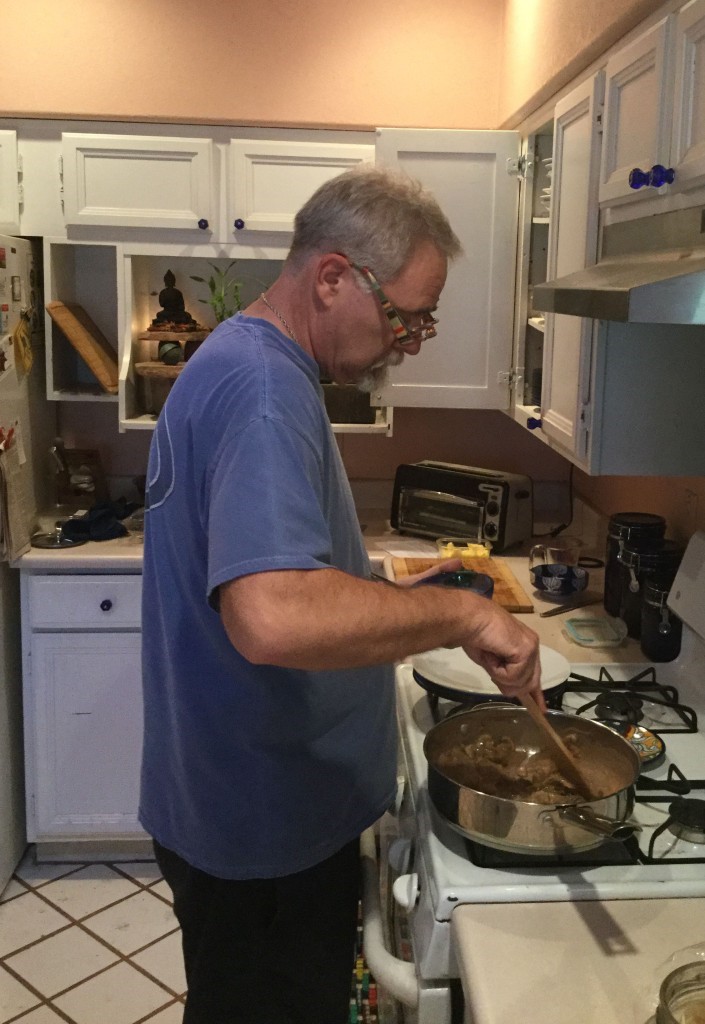
I admit that I rarely thought of caregivers before, but as I stared up from my bed—broken and sick— at the face of my masked sweetie pie, I was struck by my utter helplessness. In the beginning, I was too sick to consider how much work I’d become. Nor did it register that I wasn’t the only person in Ryan’s care. His prime caretaking responsibility is his 85-year-old mom who is losing her eyesight and suffers from dementia.  


So, Ry was now faced with two of us. When the Covid started to ease, I jokingly called Ryan Ethan Frome, the title character in the 1911 novel by American author Edith Wharton. For those who are unfamiliar with the story, poor Ethan, who has a disabled shrew of a wife, falls in love with a pretty young woman. Then, with no way out, they decide to commit suicide together, however the plan goes awry. They both live, but the woman becomes disabled, so Ethan now has two sickly people to care for.

Ryan, as my caregiver, had to do everything when I was sick and broken.

According to the AARP, “Every day, some 48 million Americans help parents, spouses and other loved ones with medical care, meals, bathing, dressing, chores and much more. They do it out of love, not for pay.”

When I was well enough to notice, I realized the enormous pressure Ryan faced. He had to feed his mother, monitor her medications, and tend to grocery shopping and medical appointments, as well as weather her constant confusion and memory issues. Then he had to come to my house and care for all my needs, as well.  

As you can imagine, caregivers are suffering. “Family caregivers now encompass more than one in five Americans,” says the research series Caregiving in the US.  “The study also reveals that family caregivers are in worse health compared to five years ago.” Caregivers spend a whopping 13 days each month “on tasks such as shopping, food preparation, housekeeping, laundry, transportation, and giving medication.”

These constant demands force caregivers to push their own lives and needs aside, often causing burnout. Between 40 to 70% of caregivers are said to suffer from depression, with those attending to patients with cognitive decline being the most likely to be affected. Also, chronic illnesses like diabetes, arthritis, high blood pressure, heart disease, and immune system disorders can worsen.

Ryan stepped up and became a caregiver when I needed him. I will always be grateful.

What can caregivers do? First, ask for help, if you’re feeling overwhelmed. There are agencies all over the country that offer services to caregivers that can help lighten the load, so check the Internet and your insurance company to see what’s available. Do the best you can but forgive yourself when days don’t go as planned. And carve out some time out for yourself.

Every Tuesday, Ryan goes to lunch with his long-time buddies. The gathering is his one time of respite during the week when most of his efforts revolve around me and his mom. He always seems more energized when he returns from these get-togethers and happily tells me what’s new with the boys.

November is National Family Caregivers Month, so I’d like to give a big shoutout to those who shoulder the responsibilities for others. Caregiving is an exhausting, often overlooked effort. So, thank you to all the folks who support those of us in need.

And, of course, I’m especially grateful for Ryan who jumped in with both feet when my health failed, never getting angry, and doing his best to cheer me up when I was down.

Thank you, Ry. I love you!

Here is a look at one of my thrillers for your reading pleasure.

Ancient ruins, haunted memories, and a ruthless criminal combine with a touch of mystic presence in this taut mystery about a crime we all must address. Maggie, a National Park Ranger of Native American descent, is back at The Castle—an ancient pueblo carved into a limestone cliff in Arizona’s Verde Valley.

Maggie, who suffers from depression, has been through several traumas: the gang rape she suffered while in the Coast Guard, the sudden death of her ten-year-old son, and a suicide attempt. 

One evening, she chases a young Native American boy through the park and gasps as he climbs the face of The Castle cliff and disappears into the pueblo. When searchers find no child, Maggie’s friends believe she’s suffering from depression-induced hallucinations. 

Maggie has several men in her life. The baker, newcomer Jim Casey, who always greets her with a warm smile and pink boxes filled with sweet delicacies. Brett Collins, a scuba diver who is doing scientific studies in Montezuma Well, a dangerous cylindrical depression that houses strange creatures found nowhere else on Earth. Dave, an amiable waiter with whom she’s had a one-night stand, and her new boss Glen. 

One of these men is a serial rapist and Maggie is his next target. In a thrilling and terrifying denouement, Maggie faces her rapist and conquers her worst fears once and for all. 

Available at Amazon and all major vendors.

Anne Montgomery has worked as a television sportscaster, newspaper and magazine writer, teacher, amateur baseball umpire, and high school football referee. She worked at WRBL‐TV in Columbus, Georgia, WROC‐TV in Rochester, New York, KTSP‐TV in Phoenix, Arizona, ESPN in Bristol, Connecticut, where she anchored the Emmy and ACE award‐winning SportsCenter, and ASPN-TV as the studio host for the NBA’s Phoenix Suns. Montgomery has been a freelance and staff writer for six publications, writing sports, features, movie reviews, and archeological pieces.

When she can, Anne indulges in her passions: rock collecting, scuba diving, football refereeing, and playing her guitar.

Learn more about Anne Montgomery on her website and Wikipedia. Stay connected on Facebook, Linkedin, and Twitter.